

For the last few months, actually around the last six months, I went back to pen and paper. I am an app reviewer. I have over 500 YouTube videos out where I review apps. But I was, and still am, tired of apps: the constant chase for the perfect workflow so that I can do more and more and more. At a certain point I had to stop myself and ask if I really want to do all of the things I am doing. The answer was no. But I was only able to realise that because I went back to pen and paper. I slowed down to reflect. Even though I have since added more digital tools to my productivity system, the main stuff happens on paper and digital tools are for storage. I call it warm and cold stuff. A project I am working on is analogue, a project I am planning to do someday is digital. A task I am doing this week is analogue, a task I am going to work on someday is digital.
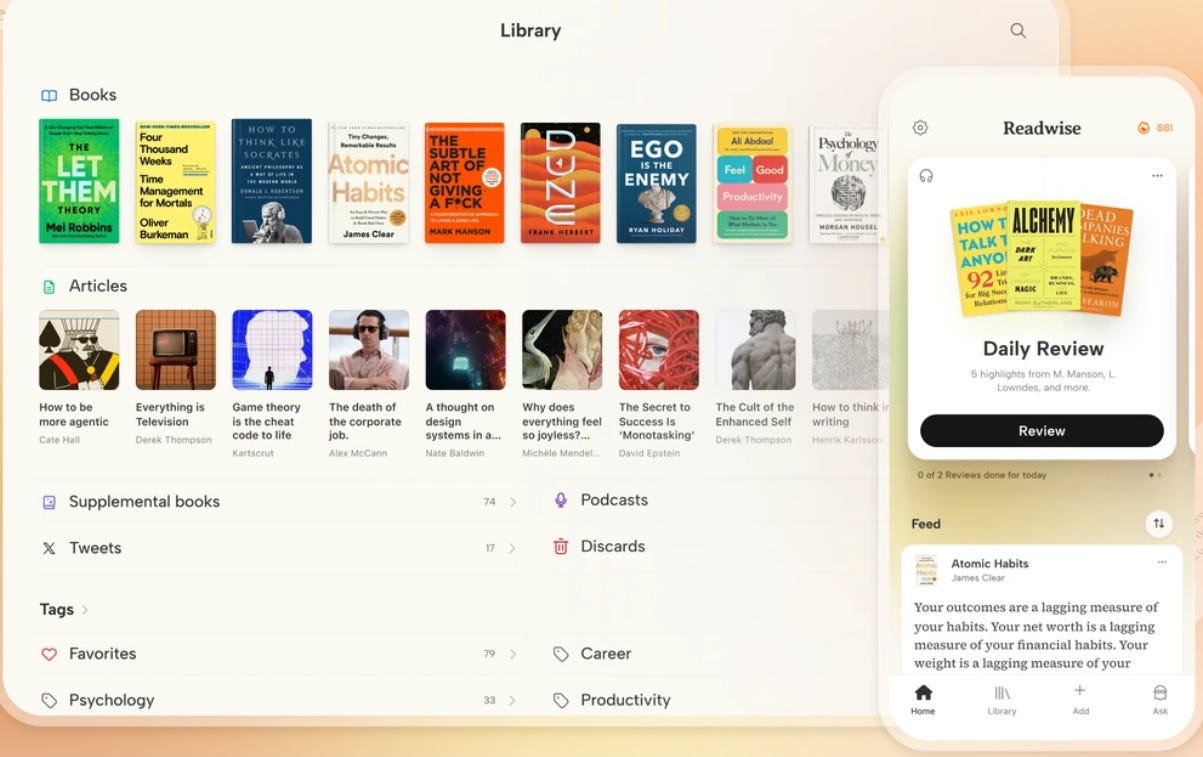
One of the apps I moved away from was Readwise, and second brain apps in general. I remember that when I used Readwise, I would read not to read, but to highlight. The goal was to highlight. I could not remember what I read, but at least I had 50 highlights that I would never look at again. The chase for efficiency stopped me from enjoying life itself. I did not download Readwise to highlight things so I could feel productive. I downloaded it so that I could read, highlight stuff and reflect on it. I could go back into the app with a vague thought of a quote or an idea that I had saved. Then I could find things and start thinking about them, connecting different ideas and building an idea. That was the thing I wanted.
What I did was totally different. I had this idea of capturing as much as possible. The more I captured, the better, because I could rely on AI to organise for me and to find the right thing whenever I needed it. I did not need to think about it. AI could connect things for me. “I need not think, if only I can pay.” The quote is from Immanuel Kant’s essay “What Is Enlightenment?” I think that applies to me as I was trying to outsource my thinking.
Thinking, connecting your ideas and building new ideas is the hard part, but it is also the part that makes an essay, book, video or anything creative special. It is the thinking. It is the constant reviewing, reading and idea building that makes something special. This applies to the AI art debate as well. It is not just the art that I care about; it is the real process. I am not saying that you have to suffer to create something good. But there has to be a reason, a process, an emotion. When I look at something or read something, there are two things I try to think about: what did it make me feel, and what did the author try to convey? I fell into the trap of wanting efficiency and ended up not creating something good or something I was really proud of for a while. If I am reading, watching a movie or writing an essay just to say that I have done it, then I am not doing it for the enjoyment. I am not doing it because I like it; I am doing it as a job, one that does not pay me. It becomes a chore, and is that really what we want for our reading or consumption in general? What is the point of reading a book if I am not looking to understand what it is about? Instead I am looking for quotes I can publish on social media, or add to my second brain and AI system.
Let me just be clear: I am not totally against AI use. I will not shame people for using AI, and I use it a lot myself. I recently looked into launching a membership and needed a budget to see what it would take to break even. I used AI to make that. I have vibe coded basic sites. I have used AI to check my grammar. So I am not saying never to use AI or that AI is wrong. I am not saying that efficiency in itself is always wrong. Some things in life require efficiency. They require things to be done quickly, and using tools to get them done is okay.
What I am saying is don’t bring that efficiency mindset from work to your hobbies or to the things that drive you. I might be the worst-case scenario, but instead of watching a TV show, I used AI to summarise it. Another example, which is maybe better, is when I discovered Wispr Flow. Wispr Flow is a transcription tool that allows you to talk into your computer instead of writing. When I first got it, everything suddenly was faster: writing an email, answering a message, writing AI prompts. I even started writing my articles with it. Instead of writing an essay for Substack, I would just dictate it. I did this for three or four posts, mainly on Medium. The posts were okay. I mean, how bad can an app review be if you spend all of your spare time testing applications? However, they were not great and, even more importantly, I felt no sense of accomplishment writing them. Maybe that was because I did not write them; I just dictated them.
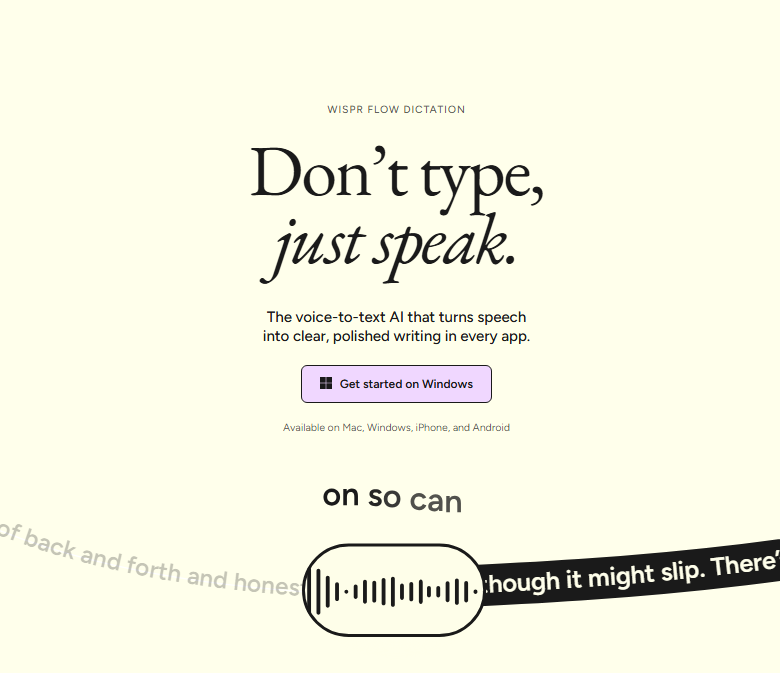
That is when I took a step back and went back to paper. I am continuing to use paper for most of my stuff, but I am currently reintroducing Sublime and Readwise into my stack. I also still have a Wispr Flow subscription (no worries, I am not using it for this essay). However, the paper part of my system reminds me of what I should be doing and how I should use digital tools.
Let me start with the Wispr Flow example. I might not want to use Wispr Flow to write my Medium posts, but I can gladly use it to help me answer the 300 unread emails I promised to get through last weekend, and the weekend before that. Sometimes I feel like if I just stare hard enough at the email client, the emails will answer themselves. Unfortunately, that has not happened yet, so instead I am using Wispr Flow. Otherwise I just would not be able to do it.
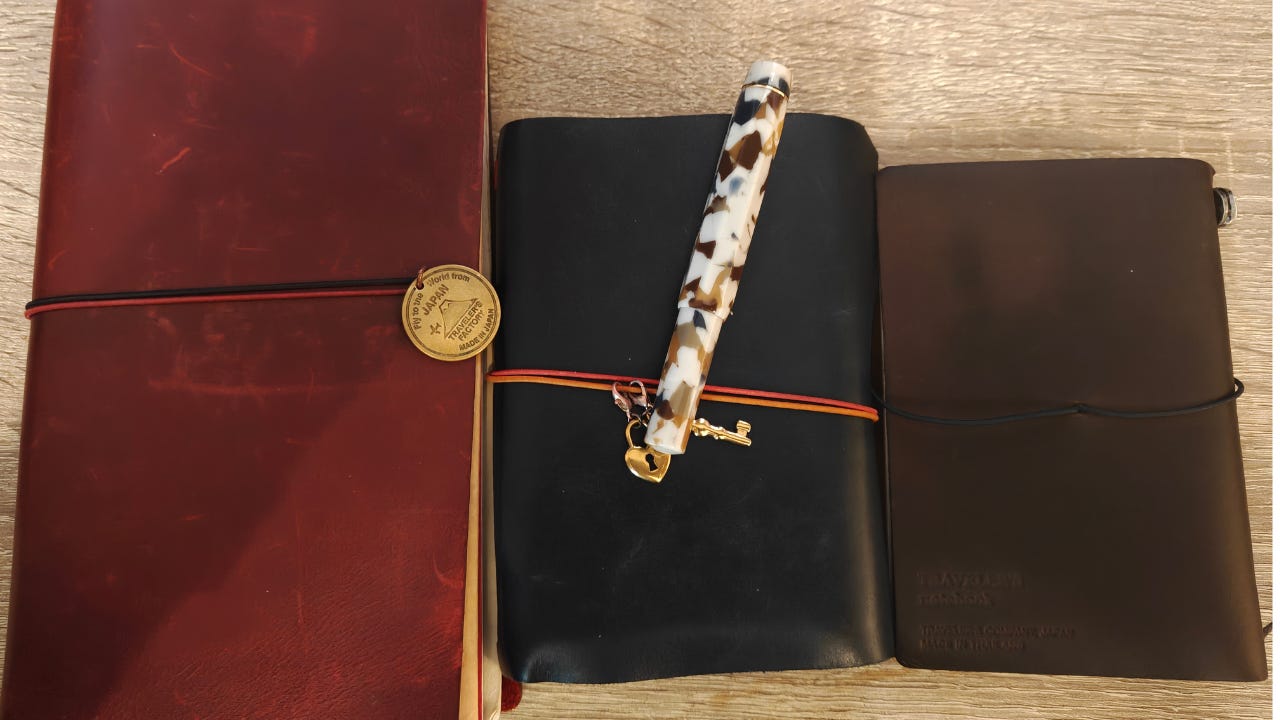
Reintroducing Readwise is also a great example that might help you understand how I am thinking about this. I read a book and highlight as I go. I have a Kobo, and I really like the Reader read-it-later app. I highlight, and once I am finished, I write one page about it in my regular-size Traveler’s Notebook. I write about how I understood the plot, the book or the article. What stood out to me? Then I go through my highlights. They automatically get added to Sublime, where I can bring them up on a canvas and work through them, but that is not what I do at first. I first go through my highlights and move the important ones into my commonplace book. I write them by hand. Every morning I try to start my day by spending 15 to 30 minutes in my notebook just reading and reflecting. That is actually how this idea started, with the quote from Kant earlier in the post, and I combined that with a lot of thoughts about AI that I had in my journal.
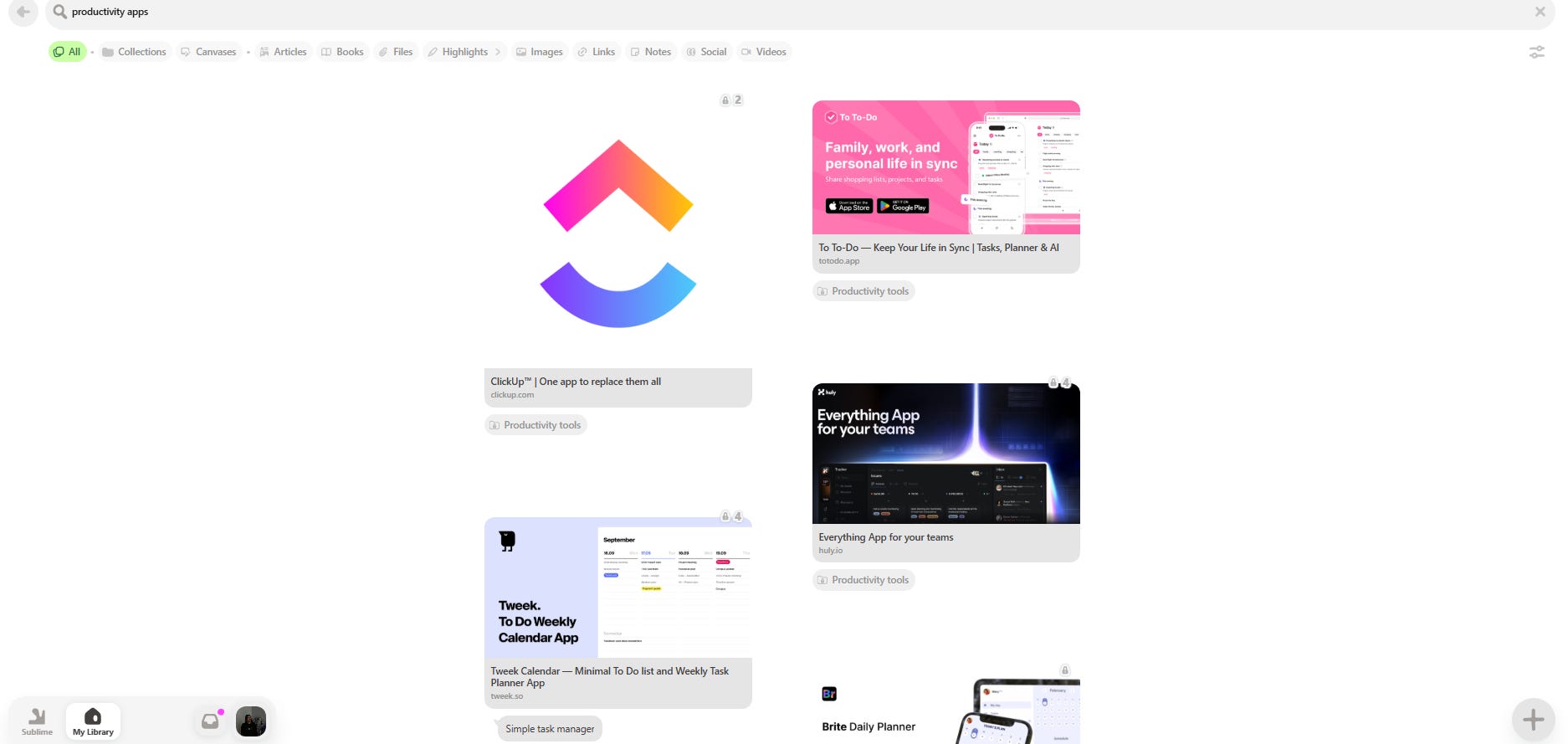
What Sublime does is work as a storage space for digital things. For example, if I find a picture online, I will not print it and stick it into my notebook, at least not all of them. But I will add them to Sublime. Once I have started fleshing out an idea in my notebooks, I will go into Sublime and see if I can continue to add things on top of that. Then I will often find more ideas in Sublime that I can combine with my notebooks. But I continue to journal about it as I find new ideas. The whole process actually takes a while, but it gave birth to this post, which is the one I am most proud of. I feel so good writing it! In other words, it is worth the process for me.
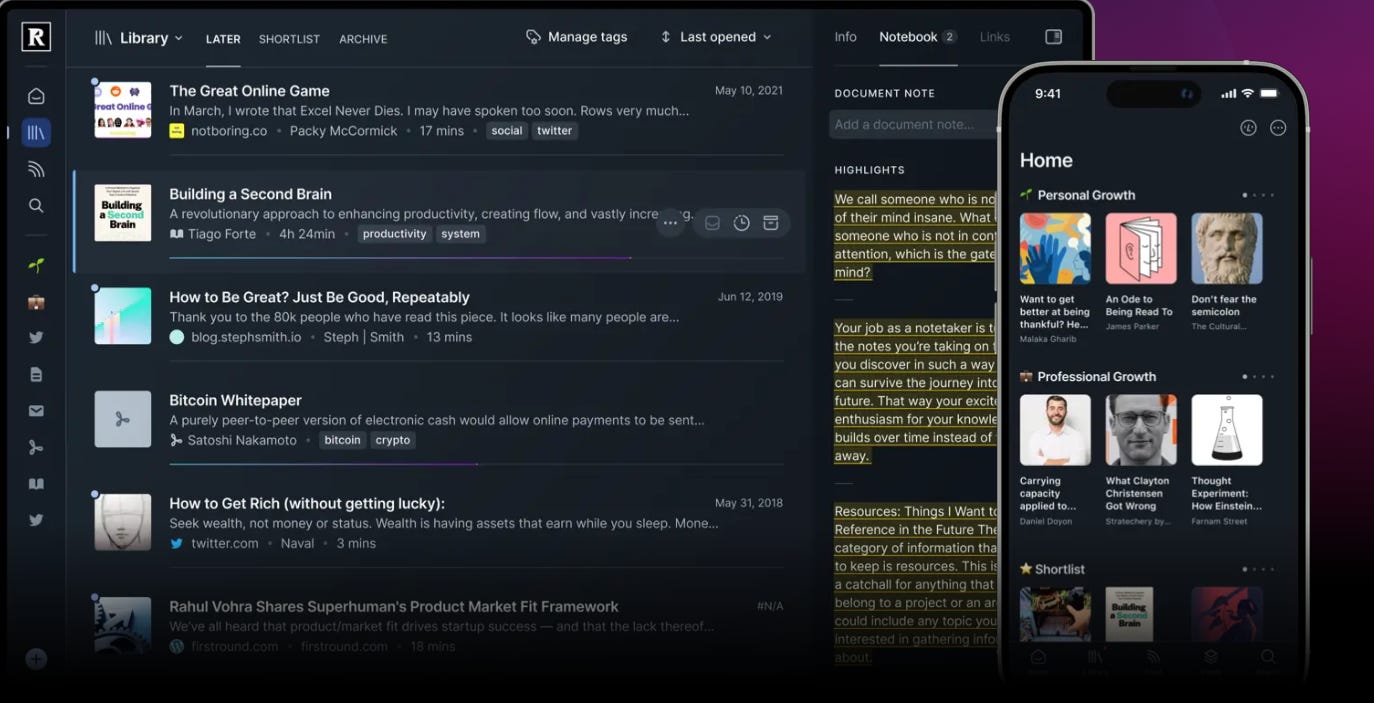
Readwise just functions as a place for me to quickly highlight stuff and work through my highlights. With Readwise I have all of my articles, PDFs, newsletters and books in one place, which just makes the process of transferring things easier. That is the role of Readwise. But as you can read, I still rely heavily on analogue tools because I think the friction helps bring the best ideas to life.
This system works for me, but it is also personal. It will not work for everyone. It works for me because, both in my day job and with my social media, I get paid based on my ideas and creativity. I have the time to spend on something like this because it literally pays me back. I get that not everyone needs a complex system like this, but this is not an essay to argue in favour of my system; it is rather an essay to argue for living life and not trying to efficient your way out of living.
The point of reading a book is to read the book. If you start having that mindset, you might quickly figure out that you hate the things you are reading. I have read a lot of books I hated that everyone else loved. It was when I stopped reading those books and started reading the books I liked that I was able to build a reading habit. I think the algorithm influenced me to read books that were outside of my area of interest.
With all of this, I am trying to say there is no right or wrong answer, and I don’t even know if I have my own answer yet. I might change my mind next week or the week after that. I am a walking contradiction, but that is also what makes me special. Humans are imperfect, and that is just something we should accept and lean into. We contradict ourselves, and that is what makes us interesting. I love productivity, sports and tech, but my favourite artist is Sabrina Carpenter, and I always cry when I watch the last episode of Gossip Girl. That is a contradiction, but it also makes me interesting.
All that to say, I am in search of the slow life and I am getting closer, but I don’t think I have figured it out yet.
Community
If you found this essay interesting and would like to have discussions like this, or you are in search of a more mindful approach to productivity, I have a paid community which I am starting. You can sign up to the waitlist here to hear more when it launches. The goal is to help each other live more mindful lives.